Location
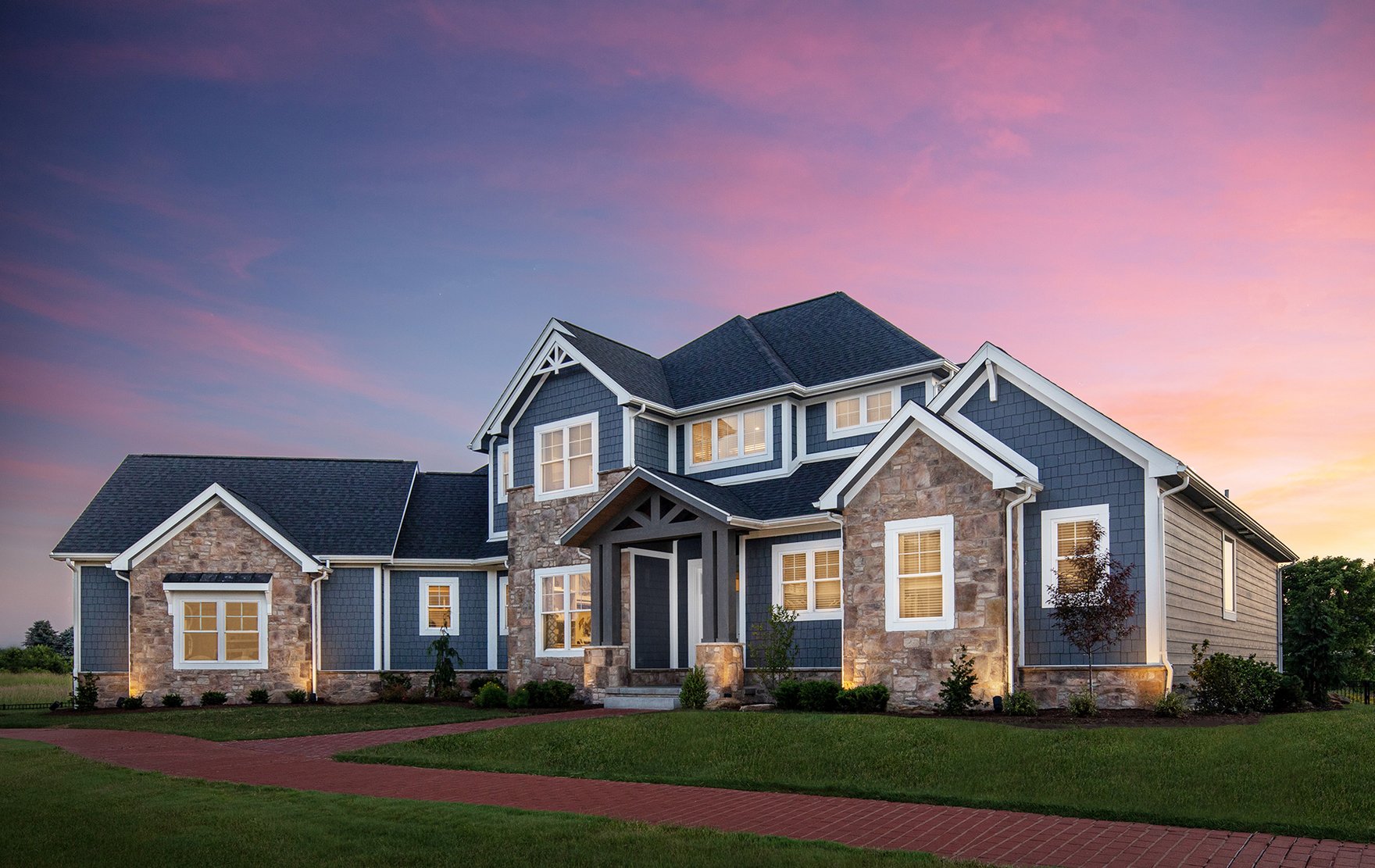
Why We Use Fiber Cement Siding on Our Custom Homes
January 11, 2021
-
Get Your Free Guide Book
Inspiration, process, and more to get you started on the right foot.
-
Find a Design Studio
Our team of experts is available to design and build your dream home typically within 75 miles of our Design Studios. Find a location near you.
Every detail of your custom home matters, including the siding you pick for your home’s exterior. Picking the right style shouldn’t mean compromising on quality, nor the other way around.
That’s why at Schumacher Homes, we’re proud to offer fiber cement siding from James Hardie Building Products as an exceptional option for your home’s exterior. Its combination of durability, design, and value makes James Hardie siding one of the best choices on the market. Here’s why.
James Hardie siding protects your investment in a custom home
Fiber cement siding is one of the longest-lasting and lowest-maintenance materials available. It has the looks to match, too (more on that in a moment). James Hardie siding consistently ranks as builders’ and homeowners’ favorite. That's earned it the affectionate nickname of “Hardie board.”
James Hardie® fiber cement siding is made of Portland cement, sand, water, and cellulose fibers. The company invented modern fiber cement over 30 years ago and it’s America’s most popular brand of siding. It’s not only durable, but widely considered the most sustainable. In fact, the Green Builder® Media annual Readers’ Choice survey named James Hardie as the “Greenest Siding Brand” of 2020.
That eco-friendly composition helps protect the planet while it protects your home. James Hardie fiber cement siding is:
- Created to withstand damage from moisture and rot.
- Engineered to stand up to the demands of your specific climate.
- Unappealing to woodpeckers, termites, and other pests.
Even better, James Hardie siding looks as good as it performs.
James Hardie siding works with every style of home
Do you dream of a Modern Farmhouse home finished with board and batten siding? Or how about a Craftsman-style home accented with rustic shake siding? James Hardie offers a wide range of styles to help you choose the right siding for your home, including: HardiePlank® lap siding, HardiePanel® vertical siding, and HardieShingle® siding.
Each of these siding products presents further options to give your custom house plan the look you want. It starts with texture, from smooth modern finishes to rough sawn patterns that mimic the look of real wood.
From there, you get to choose from an array of colors. Homeowners who build in the country, for instance, prize Timber Bark. Its deep gray-brown character complements natural landscapes well. Evening Blue, by contrast, has the versatility to work well in the country, suburbs, and city.
No matter what color you pick, it comes prefinished with ColorPlus® Technology to resist damage such as fading and chipping. One more reason we like James Hardie siding: You don’t have to pick a color. Opt for primed instead, and then paint your home the exact color you want.
James Hardie backs its siding with one of the best warranties in the industry
At Schumacher Homes, we believe everyone deserves a custom home. We also recognize that a custom home is one of the biggest investments many people will ever make. An investment like that deserves peace of mind so you can enjoy it for years to come.
That’s why our building product manufacturers offer the best warranty coverage you’ll find. On top of that, we include a 2-10 Home Buyers Warranty (also known as 2-10 HBW).
We hold our premium selections to the same standards, including James Hardie siding. All James Hardie siding products come with a 30-year, non-prorated warranty. HardieTrim® products come with a 15-year, non-prorated warranty. ColorPlus® Technology finish comes with a 15-year limited warranty that covers paint and labor, protecting against peeling, cracking, and chipping.
Learn more about the Schumacher Home’s difference, from the materials we use to our Selections process, by visiting a design studio in any of the markets where we build.
For Louisiana Customers: In our Louisiana building areas, we use Nichiha. Like James Hardie products, Nichiha adds great value to the home and looks fantastic on the exterior.
Have Questions? Let's Talk.
Frequently Asked Questions
When in the planning process should I hire a custom home builder?
Ideally, you should involve a builder before you finalize plans or purchase land. Bringing them in early lets you align design with budget and avoid costly site surprises.
What financial questions should I ask beyond price and contract type?
Ask how and when payments are collected, whether they help coordinate with your lender, and what happens if your appraisal comes in low. Clarify policies for cost overruns.
How is working with a fully custom builder different from a semi-custom or production builder?
Fully custom builders offer more flexibility in floor plans and materials but usually require more decisions. Semi-custom or production builders often limit choices, which can simplify decisions but restrict personalization.
What are warning signs that I should avoid a particular custom home builder?
Be wary of builders who resist putting details in writing or pressure you to sign quickly. Frequent staff turnover, poor responsiveness, or inconsistent online reviews can also signal future problems.
How should I prepare before my first meeting with a custom home builder?
Come with a realistic budget range, a list of must-haves, and any example floor plans you like. If you already own land, bring any surveys or documents you have.
What should I ask about building in an HOA or master-planned community?
Ask if the builder has worked with that HOA before and how they handle architectural review approvals. Confirm how HOA rules might affect your design and exterior materials.
How can I evaluate a builder’s approach to healthy, sustainable materials?
Ask which low-VOC paints and flooring they use by default and what eco-friendly options are available. Request examples of past projects where they incorporated energy-efficient systems and durable materials.