Location
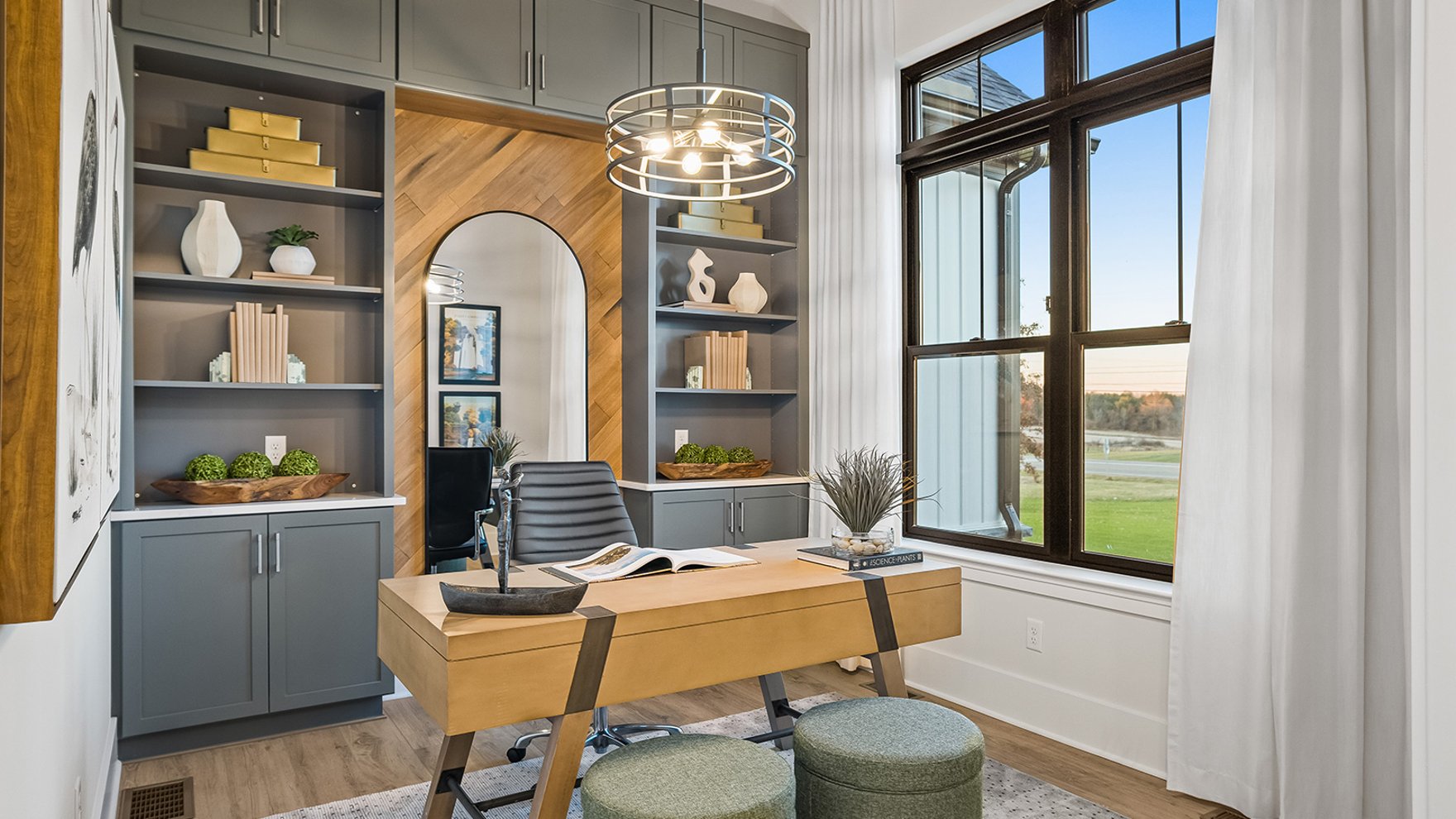
Today’s Home Office: 4 Tips for Designing a Productive, Comfortable Workspace
June 03, 2020
-
Get Your Free Guide Book
Inspiration, process, and more to get you started on the right foot.
-
Find a Design Studio
Our team of experts is available to design and build your dream home typically within 75 miles of our Design Studios. Find a location near you.
The home office of today takes a huge leap forward from those of the past, and for good reason. With more people working remotely than ever before, home offices are rapidly transitioning from a secondary to primary workspace.
According to FlexJobs, 4.7 million Americans now work remotely. It’s influencing their housing decisions, too. Zillow’s research shows that 53% of remote workers either bought a new home or took on a remodeling project to better fit their lifestyle.
Gone are the days of cramming a desk and chair into a cluttered, dimly lit spare bedroom. Today’s home offices have to be comfortable, organized, and inspiring. Homeowners need a workspace that supports their productivity, then helps them relax by offering a quiet retreat to read or work on side projects. Kids benefit, too, from having a place to focus on homework.
It’s no surprise then that more people are investing in custom home offices, prioritizing them like a second bathroom or third garage spot when laying out their floor plans. Looking to design your ideal home office? Here are four tips to help you get started.
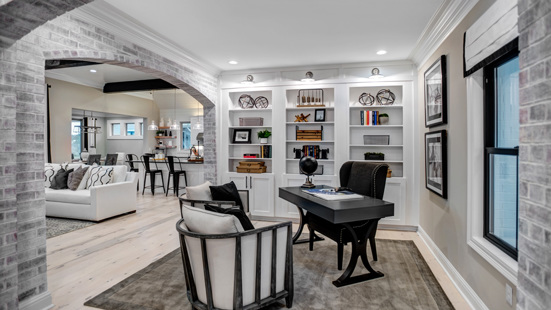
Light Up Your Workspace
Lighting plays an important role in your home office, yet it’s easy to overlook. A well-lit office boosts productivity. It not only helps you focus on work, but also energizes the room.
Start by focusing on ambient lighting, also known as the general lighting of the room. Recessed ceiling lights work great for this, especially when you add a dimmer. You can get creative with your ambient lighting, too. For instance, a chandelier can catch the sunbeams spilling in through the window, filling the room with warm sunlight.
Next, focus on task and accent lighting. We’re not just talking desk lamps, either. Wall sconces can put light where you need it while making a statement with their architectural detail. Though subtle, under-cabinet lighting is a great addition to your built-in shelving and cabinets. The visual interest they create, especially when highlighting the things that inspire you, instantly brings a custom look to your home office.
.jpg)
Forget the Filing Cabinet
Speaking of built-in shelving and cabinets, organization is king when it comes to being productive in your home office. That’s true whether you’re designing one from the ground up, or adapting a flex space or bonus room. Built-in shelving and cabinets not only make it easy to cut the clutter, but they’re also one of the most attractive customizations you can add to your workspace.
Cabinets provide you space to store important documents, such as deeds and financial records, that you don’t want to lose track of. You can even add locks for security and roll-out drawers for convenience.
But shelves are what really draw the eye. Use them to display what inspires you, such as family photos, memorabilia, and the books that have shaped your life. And with in-cabinet lighting, you can showcase every piece, like a personal museum.
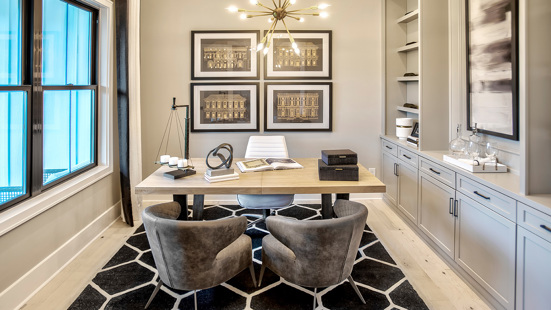
Give It Some Style and Personality
To better own your work, own your workspace. With a home office, you have the chance to infuse your personal style into your work. Put up textured or print-patterned wallpaper to create visual interest. Wallpaper not your thing? How about an accent wall with shiplap or judges paneling?
After customizing the walls, choose a flooring that speaks to you. If comfort makes you feel most productive, then a cozy, warm carpet may be your best bet. Or maybe you’re looking for something cleaner, more contemporary, or easier to clean? If that’s the case, turn to hardwood or laminate flooring.
You can take things further with an area rug that reflects your style and personality. Let a fiber rug remind you of your favorite vacation spot, or create a focal point by putting down a colorful Bohemian pattern. There’s no shortage of design options for turning your home office into a place that excites you every workday.
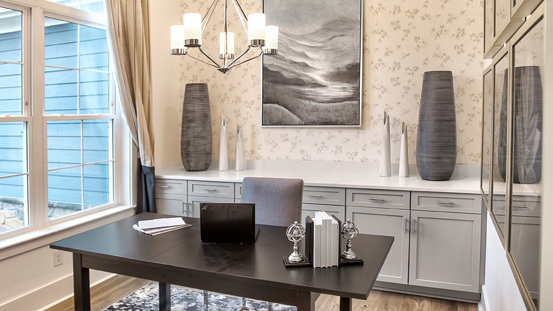
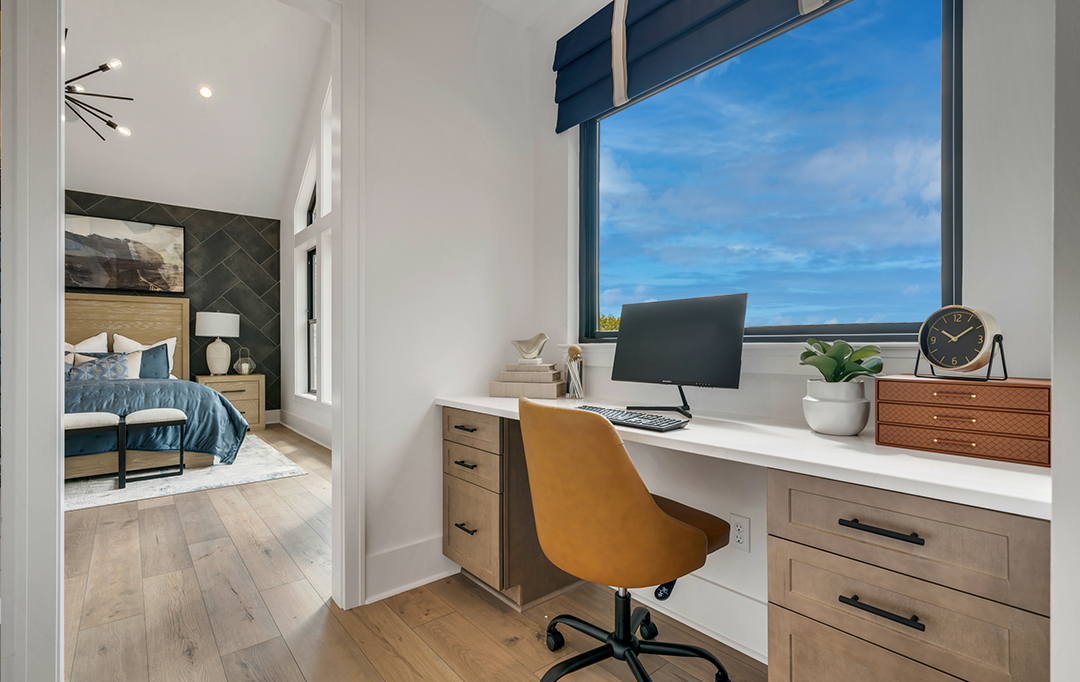
A Small Yet Mighty Alternative to the Home Office
A pocket office is a great option to the traditional dedicated home office, and can be added to any floor plan you pick for your new custom home. These small yet effective workstations typically sit right off of the kitchen for convenience. With the addition of counter space, base cabinets and drawers, and maybe even a single pendant light, pocket offices are great for when a smaller workspace is needed. They also help out when multiple people in the house need an office space at the same time.
Have Questions? Let's Talk.
Frequently Asked Questions
When in the planning process should I hire a custom home builder?
Ideally, you should involve a builder before you finalize plans or purchase land. Bringing them in early lets you align design with budget and avoid costly site surprises.
What financial questions should I ask beyond price and contract type?
Ask how and when payments are collected, whether they help coordinate with your lender, and what happens if your appraisal comes in low. Clarify policies for cost overruns.
How is working with a fully custom builder different from a semi-custom or production builder?
Fully custom builders offer more flexibility in floor plans and materials but usually require more decisions. Semi-custom or production builders often limit choices, which can simplify decisions but restrict personalization.
What are warning signs that I should avoid a particular custom home builder?
Be wary of builders who resist putting details in writing or pressure you to sign quickly. Frequent staff turnover, poor responsiveness, or inconsistent online reviews can also signal future problems.
How should I prepare before my first meeting with a custom home builder?
Come with a realistic budget range, a list of must-haves, and any example floor plans you like. If you already own land, bring any surveys or documents you have.
What should I ask about building in an HOA or master-planned community?
Ask if the builder has worked with that HOA before and how they handle architectural review approvals. Confirm how HOA rules might affect your design and exterior materials.
How can I evaluate a builder’s approach to healthy, sustainable materials?
Ask which low-VOC paints and flooring they use by default and what eco-friendly options are available. Request examples of past projects where they incorporated energy-efficient systems and durable materials.