Location
Comparing Granite & Quartz Countertops
April 15, 2024
-
Get Your Free Guide Book
Inspiration, process, and more to get you started on the right foot.
-
Find a Design Studio
Our team of experts is available to design and build your dream home typically within 75 miles of our Design Studios. Find a location near you.
Choosing a suitable countertop material is a top priority when starting a bathroom or kitchen remodel. After all, countertops serve an essential function while adding to an interior’s overall aesthetic appeal. Quartz and granite are both popular pics in custom-built homes, but does one reign supreme?
Granite vs. quartz is a widely debated topic, so it’s vital to consider the durability, cleaning and maintenance, and aesthetics of each material before deciding. Below is an in-depth look at the different types of stone countertops to help you make the right choice for your space and needs.
Granite
Go for granite if you want one-of-a-kind countertops to earn your bragging rights with interior design-savvy buddies. The igneous rock starts as magma before it cools down and solidifies. The mineral composition of granite varies, so no two slabs are identical—the unique mineral makeup contributes to the color and pattern. For example, granite containing garnet takes on a deep red hue. On the other hand, the quartz in granite produces a cloudy white color, and the amphibole gives the stone a forest green or black tint.
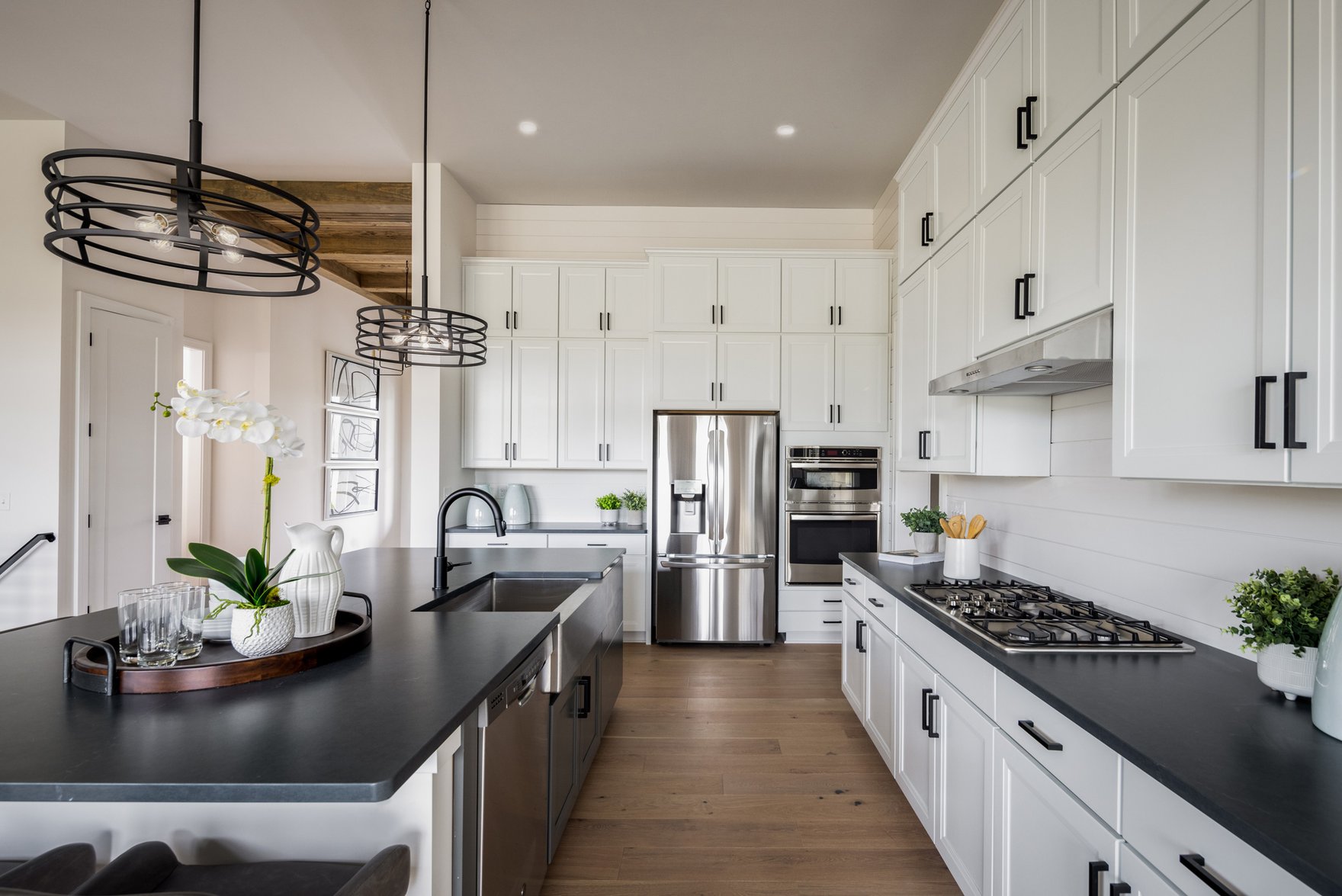
Although you should choose granite stone countertops based on your color, veining, and flecking preferences, deep blue, black and charcoal slabs are trending. The darker color paired with intricate veining and a brushed finish creates textural contrast and dimension in kitchen and bathroom designs.
Granite scores a 6 or 7 on the Mohs scale, making it similar in hardness to quartz. It’s a great option if you want highly durable stone kitchen countertops. You can cut directly on the surfaces if you don’t own (or don’t want to dig through cabinets for) a cutting board.
While quartz can handle a little heat, granite can withstand heat that exceeds 500 degrees Fahrenheit. Go ahead and put hot pots and pans directly on your granite countertops. Cleaning is also a breeze if you have mild dish soap, water and a microfiber cloth.
Unlike quartz, granite is porous. Consider this if your sights are set on granite countertops in the kitchen or bathroom. They must be sealed at least once a year to prevent liquids from staining them. If you aren’t up to the maintenance requirements, granite might not be the best choice for your bathroom or if you’re prone to spilling liquids in the kitchen.
Quartz
Quartz countertops offer versatility in terms of style. The igneous rock is mined, crushed and mixed with polymer resins to create an approximately 95% mineral quartz slab. If you prefer a nontraditional countertop color, quartz might be the best choice. Adding pigments means quartz countertops are available in numerous colors and patterns.
You can create the lavender or sage green quartz countertops of your dreams or opt for a statement-making neutral. Sleek black quartz with thick white veining is a welcome addition to contemporary and modern kitchen and bathroom designs.
Quartz countertops that mimic the texture and finish of natural wood are also popular without the added upkeep associated with butcher block.
Because quartz countertops are manufactured with resins, the material is non-porous and never needs sealing to prevent kitchen and bathroom stains. With a Mohs scale hardness of 7, quartz is a virtually indestructible mineral. It’s perfect for at-home chefs who like to chop vegetables directly on the counter.
Installing quartz countertops will reduce chore time if daily cleaning isn’t your thing. To keep the surfaces in good condition, wipe them down with a microfiber cloth soaked in dish soap and warm water or an all-purpose cleaning solution to remove stuck-on grime.
Although you can slice and dice food to your heart’s content on quartz countertops without scratching the surface, it’s best to put down an oven mitt before putting anything piping hot—like pots right out of the oven and heated hair styling tools in the bathroom—on your quartz countertops. The material can handle heat but not extreme heat.
Have Questions? Let's Talk.
Frequently Asked Questions
When in the planning process should I hire a custom home builder?
Ideally, you should involve a builder before you finalize plans or purchase land. Bringing them in early lets you align design with budget and avoid costly site surprises.
What financial questions should I ask beyond price and contract type?
Ask how and when payments are collected, whether they help coordinate with your lender, and what happens if your appraisal comes in low. Clarify policies for cost overruns.
How is working with a fully custom builder different from a semi-custom or production builder?
Fully custom builders offer more flexibility in floor plans and materials but usually require more decisions. Semi-custom or production builders often limit choices, which can simplify decisions but restrict personalization.
What are warning signs that I should avoid a particular custom home builder?
Be wary of builders who resist putting details in writing or pressure you to sign quickly. Frequent staff turnover, poor responsiveness, or inconsistent online reviews can also signal future problems.
How should I prepare before my first meeting with a custom home builder?
Come with a realistic budget range, a list of must-haves, and any example floor plans you like. If you already own land, bring any surveys or documents you have.
What should I ask about building in an HOA or master-planned community?
Ask if the builder has worked with that HOA before and how they handle architectural review approvals. Confirm how HOA rules might affect your design and exterior materials.
How can I evaluate a builder’s approach to healthy, sustainable materials?
Ask which low-VOC paints and flooring they use by default and what eco-friendly options are available. Request examples of past projects where they incorporated energy-efficient systems and durable materials.