Location
Home Design Trends in 2026 for High‑Income Owners
January 28, 2026
-
Get Your Free Guide Book
Inspiration, process, and more to get you started on the right foot.
-
Find a Design Studio
Our team of experts is available to design and build your dream home typically within 75 miles of our Design Studios. Find a location near you.
Instead of chasing short-lived looks, discerning buyers are focusing on timeless layouts, tactile materials, and quietly powerful technology. This guide explores where home design is headed through 2026, from lifestyle-driven floor plans to advanced materials and finishes, so you can make confident choices that will still feel right a decade from now.
A Strategic Look at Design Trends for High-Income Owners
For affluent owners, the most meaningful home trends are not about impressing guests for a single evening. They are about crafting a residence that supports health, privacy, productivity, and hospitality every single day, while remaining flexible as careers, family structures, and interests evolve.
McKinsey research reports that 65% of high-income consumers expect to spend the same or more in the coming holiday season, which aligns with continued demand for large-ticket lifestyle investments such as custom homes and substantial design upgrades through 2026.
When you look closely at design trends, three themes stand out for this group of buyers:
- A floor plan that reflects real routines, hobbies, and hosting styles rather than a generic template
- Materials and finishes that feel luxurious yet perform beautifully over decades
- Infrastructure for comfort, efficiency, and technology that is built in from day one
Lifestyle-Driven Floor Plan Concepts for Custom Homes
The most influential home design trends of 2026 begin with the floor plan. Square footage alone is no longer the defining measure of luxury. Instead, high-income owners are prioritizing how every square foot supports specific rituals, from early-morning workouts and remote meetings to long weekend dinners with friends and extended family.
Layouts are becoming more zoned and purposeful. Large, undifferentiated open spaces are giving way to connected yet clearly defined activity zones that manage sound, light, and privacy without sacrificing a sense of flow.
Entertaining and Connection at the Heart of the Plan
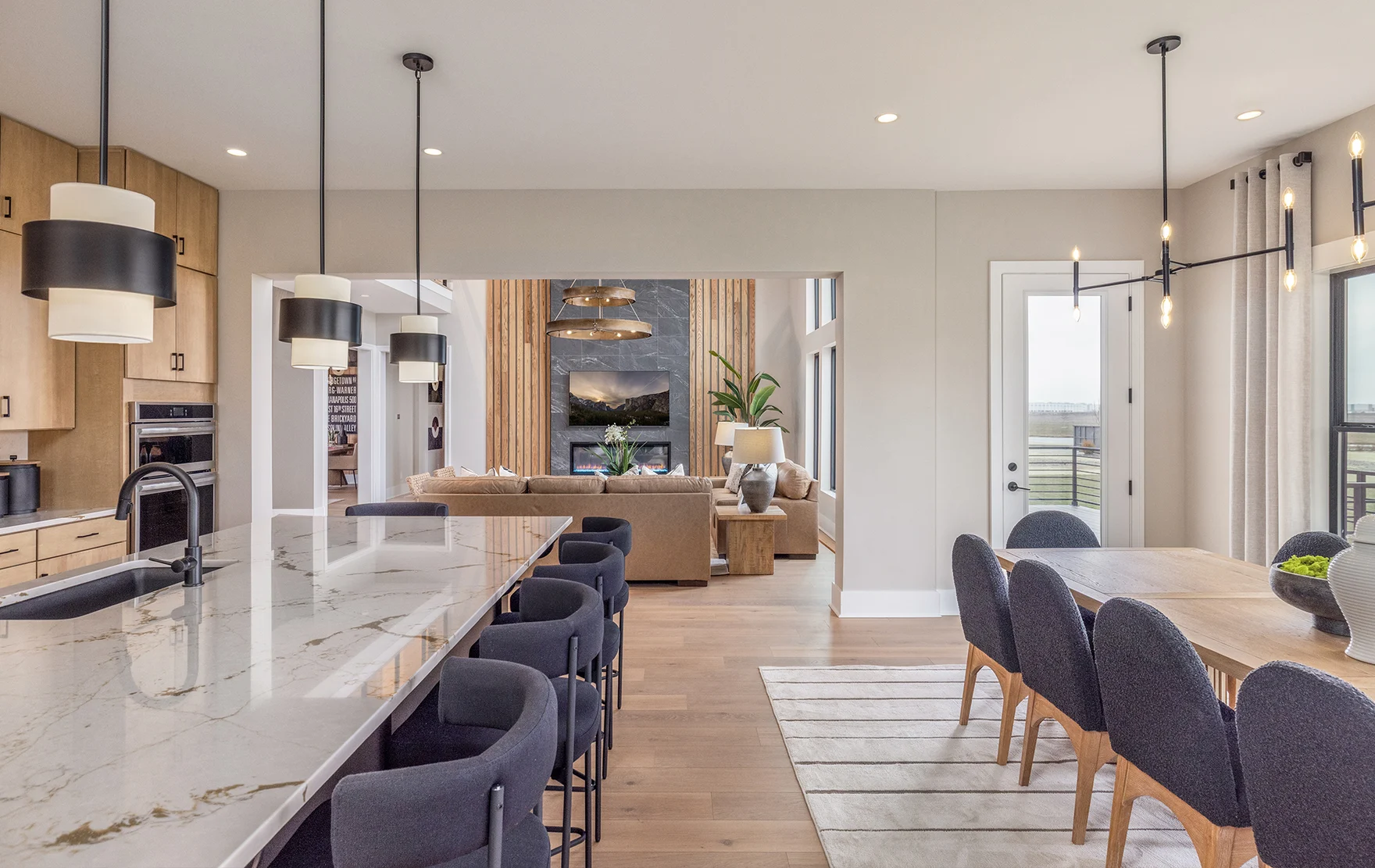
The kitchen, dining, and great room remain the social core of the home, and are leading interior design trends this year. The difference in 2026 is how these areas are layered to support both everyday life and elevated entertaining without constant rearranging or visual clutter.
Expansive kitchen islands with seating on multiple sides, generous walk-in pantries, and often a separate prep kitchen or scullery allow hosts to stage meals while keeping the main space clean and calm. Sightlines often connect the kitchen to the main gathering area and a covered outdoor living zone so conversation can extend across spaces without feeling chaotic.
Work, Focus and Flexible-Use Rooms
Remote and hybrid work patterns have settled into a long-term norm for many high-income professionals. That has pushed serious home offices higher on the priority list, often with two fully outfitted workspaces rather than a single shared desk.
In 2026, these offices are designed less like spare bedrooms with a desk and more like compact executive suites. Features often include dedicated exterior views, acoustic separation from main living zones, built-in storage for equipment and files, and integrated technology for video conferencing, all balanced with warm materials that keep the space from feeling corporate.
Beyond formal offices, flexible rooms are becoming essential. These may function as a secondary lounge, craft or music room, or study space now, with the ability to transition into a future bedroom, care space, or hobby studio as needs change. Well-placed closets, access to a nearby full bath, and sufficient natural light are small decisions that dramatically increase how many roles a room can play over the life of the home.
Multigenerational and Aging-Friendly Layouts
Many buyers between 45 and 64 are actively planning for multigenerational scenarios, whether that means welcoming back adult children, caring for aging parents, or making room for grandchildren. Dedicated suites with private baths, sitting areas, and sometimes even mini-kitchens help everyone live together more harmoniously.
Thoughtful multigenerational living plans often place these suites on the main level with their own entry or easy outdoor access. This preserves independence for the occupants while still keeping them close to the primary household activities.
At the same time, owners are quietly building in elements of accessible home design so they can age in place gracefully. No-step entries, wider hallways, stacked closets that can accommodate a future elevator, and bathrooms designed to accept grab bars and curbless showers later are all part of a more discreet, design-forward approach to long-term livability.
Materials, Finishes and Textures
Once the right layout is in place, materials and finishes determine how the home feels day to day. The standout home design trends favor authentic textures, subtle color, and durable surfaces that look even better with time, rather than ultra-glossy showpieces that demand constant maintenance.
Across many high-end projects, a few material directions are consistently emerging:
- Stone and stone-look surfaces with rich veining and honed finishes for a softer visual effect
- Warm, character-rich woods that bring depth to floors, beams, and cabinetry
- Textured metals in muted tones such as brushed brass, pewter, and blackened steel
- Large-format tile and engineered surfaces that minimize grout lines and simplify cleaning
- Performance fabrics and rugs that stand up to pets, grandchildren, and entertaining
Many interior designers point to voices like Mary Ann Pickett and Annie Diamond as shaping the current design trends conversation, especially around American style interiors that reflect the past while still feeling relevant in today’s world. There is a growing focus on creating spaces where furniture, art, and decor feel collected rather than purchased all at once, often blending vintage pieces found at flea markets with newer items chosen for quality and beauty. This approach helps a room reflect a specific era or moment, whether it is your first house or a long-loved family home, and encourages homeowners to shop with intention instead of filling space with stuff. At its core, this design philosophy is about connection, allowing each piece to tell a story, bring depth, and add a sense of warmth that makes the entire home feel personal and timeless.
Kitchen and Bath Expressions
In the kitchen, trends combine understated luxury with serious function. Many high-income homeowners are selecting a primary work surface in a durable stone or stone-look material, then accenting it with a dramatic statement slab on the island or full-height backsplash for visual impact.
Cabinetry is leaning toward simple, tailored profiles with furniture-like details on key pieces. Soft, desaturated color on perimeter cabinets paired with warmer wood islands creates depth without overwhelming the space. Integrated lighting inside cabinets and along toe kicks improves both ambiance and usability, especially for owners who entertain into the evening.
Bathrooms follow a spa-like direction, with large-format tile, calm palettes, and generous showers often replacing oversized tubs. Built-in niches, benches, and ledges streamline storage and safety. Here, subtle design choices such as gently sloped curbless entries or blocking inside walls for future grab bars allow a primary suite to evolve along with its owners.
Because the range of options can feel overwhelming, many buyers find it helpful to review curated palettes and then fine-tune them. Resources like Schumacher Homes’ guide on how to personalize your custom home tips and ideas can clarify where to add a signature touch and where to stay restrained for long-term appeal.
Exterior Materials That Elevate Curb Appeal
On the exterior, 2026 design is defined by thoughtful layering rather than excessive ornamentation. Mixed-material facades combine high-performance siding with stone, brick, or metal accents to create visual interest while respecting regional styles and climate demands.
High-quality windows and doors are becoming a central design element in their own right. Slimmer profiles, darker frames, and expansive glass openings blur the boundary between interior and exterior, support energy efficiency, and give primary living spaces a more architectural presence.
Roofing and trim selections are leaning toward nuanced, nature-inspired color palettes. Charcoal, warm gray, and soft earthy tones pair well with both traditional and modern forms, ensuring that the home feels grounded and timeless rather than tied to a fleeting trend.
Next Steps to Design a Custom Home for 2026 and Beyond
If you want to translate home design trends into a residence tailored to your life, begin with a clear picture of how you live now and how you expect that to evolve. List the routines and experiences you want your home to support, from quiet mornings and focused work to frequent gatherings and potential multigenerational living.
As you refine that vision, exploring Schumacher Homes’ house plans for multigenerational living and thoughtful accessible home design can reveal layout ideas you may not have considered yet. These plans serve as starting points that can then be customized to your land, style preferences, and priorities.
Have Questions? Let's Talk.
Frequently Asked Questions
When in the planning process should I hire a custom home builder?
Ideally, you should involve a builder before you finalize plans or purchase land. Bringing them in early lets you align design with budget and avoid costly site surprises.
What financial questions should I ask beyond price and contract type?
Ask how and when payments are collected, whether they help coordinate with your lender, and what happens if your appraisal comes in low. Clarify policies for cost overruns.
How is working with a fully custom builder different from a semi-custom or production builder?
Fully custom builders offer more flexibility in floor plans and materials but usually require more decisions. Semi-custom or production builders often limit choices, which can simplify decisions but restrict personalization.
What are warning signs that I should avoid a particular custom home builder?
Be wary of builders who resist putting details in writing or pressure you to sign quickly. Frequent staff turnover, poor responsiveness, or inconsistent online reviews can also signal future problems.
How should I prepare before my first meeting with a custom home builder?
Come with a realistic budget range, a list of must-haves, and any example floor plans you like. If you already own land, bring any surveys or documents you have.
What should I ask about building in an HOA or master-planned community?
Ask if the builder has worked with that HOA before and how they handle architectural review approvals. Confirm how HOA rules might affect your design and exterior materials.
How can I evaluate a builder’s approach to healthy, sustainable materials?
Ask which low-VOC paints and flooring they use by default and what eco-friendly options are available. Request examples of past projects where they incorporated energy-efficient systems and durable materials.